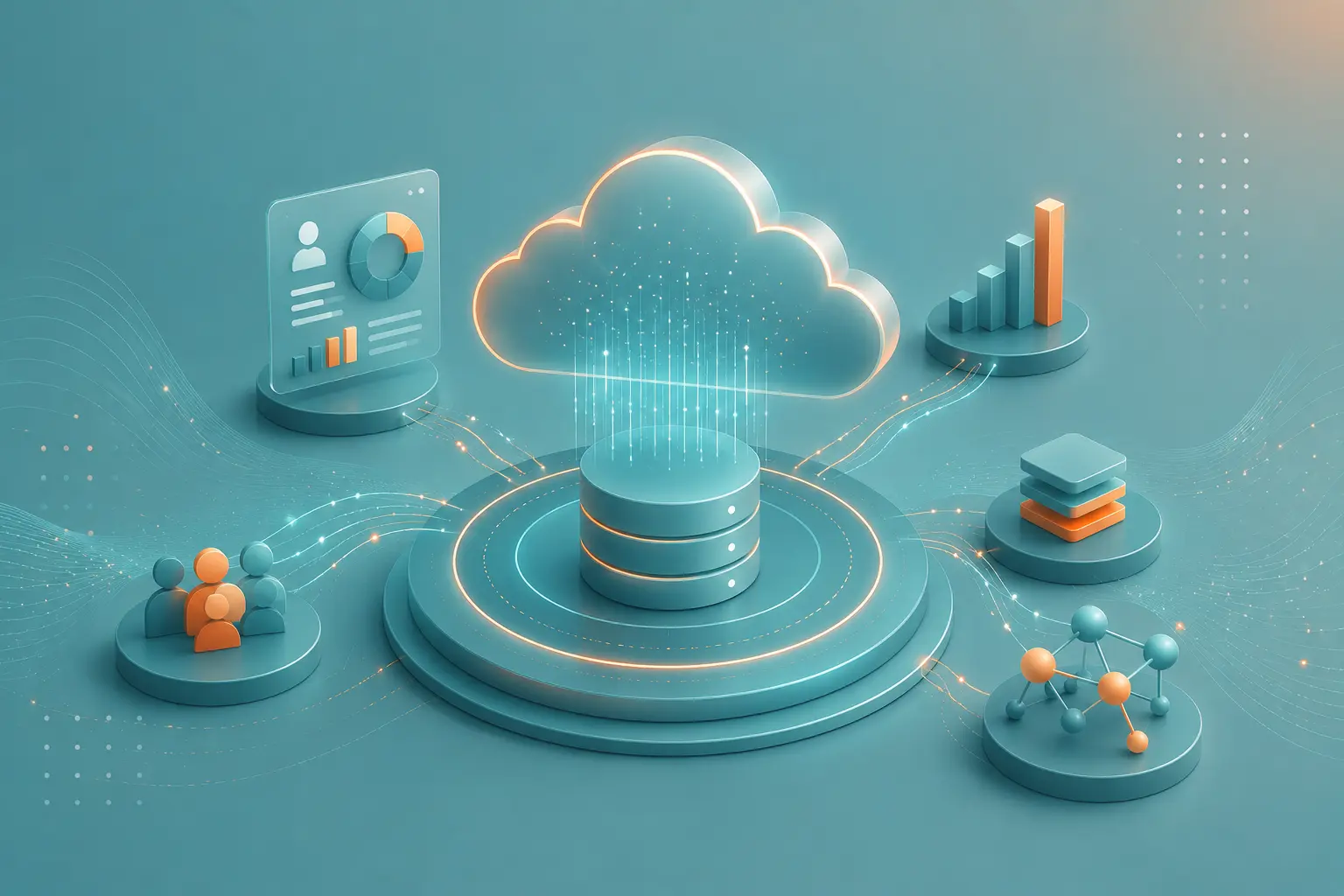
Salesforce Data Migration is the process of moving data from existing systems into Salesforce or between Salesforce environments.
Organizations may need Salesforce data migration when implementing Salesforce, replacing an existing CRM, consolidating systems, acquiring another company, or restructuring their Salesforce environment.
Data migration is more than simply exporting and importing records. A successful migration requires planning, mapping, transformation, cleansing, validation, and testing.
Poor-quality data can affect Salesforce reporting, automation, user adoption, customer experiences, and business decisions.
A structured migration process helps organizations move relevant and accurate information into Salesforce while reducing duplicates, incomplete records, incorrect relationships, and unnecessary data.
Identify the systems, objects, tables, files, records, and data sources that need to be considered.
Map fields from the source system to the appropriate Salesforce objects and fields.
For example:
Legacy Customer Name → Salesforce Account Name
Identify and address duplicates, incomplete information, invalid values, formatting issues, and obsolete records.
Transform source data into a format that Salesforce can use.
This can include changing values, combining fields, splitting fields, converting dates, or restructuring relationships.
Load the prepared data into Salesforce using appropriate tools and APIs.
Validate record counts, relationships, field values, ownership, and business rules after migration.
Business users should test migrated information and confirm that important processes work as expected.
Common challenges include:
A successful migration should begin with a clearly defined scope.
Not every legacy record necessarily needs to be migrated.
Organizations should determine:
Depending on the project, migration may involve tools and technologies such as:
The right approach depends on data volume, complexity, transformation requirements, and the source system.
Testing should include both technical and business validation.
Important checks include:
Salesforce implementation focuses on designing and configuring the Salesforce environment.
Data migration focuses specifically on moving and preparing information for that environment.
The two activities need to be planned together because Salesforce architecture and data structure directly affect migration requirements.
Shrum Tech provides Salesforce Data Migration Services covering discovery, data mapping, cleansing, transformation, migration, validation, testing, and post-migration support.
We focus on moving the right data—not simply moving everything.
It is the process of moving data from an existing system or Salesforce environment into another Salesforce environment.
The timeline depends on data volume, number of objects, data quality, relationships, transformation requirements, and source systems.
Technically, many types of data can be migrated, but organizations should first determine which data is valuable and required for business operations.
Data cleansing, matching rules, deduplication logic, and careful migration sequencing can help reduce duplicate records.
Shrum Tech can help plan and execute Salesforce data migration projects with a focus on data quality, accuracy, security, and business continuity.